Case studies
Case studies shaped by operational outcomes.
These examples keep client names private while preserving the operating problem, the intervention, and the result.
The work ranges from Odoo rescue and data migration to payment checkout, subscription continuity, commission controls, CRM intake, integration design, and reporting repair.
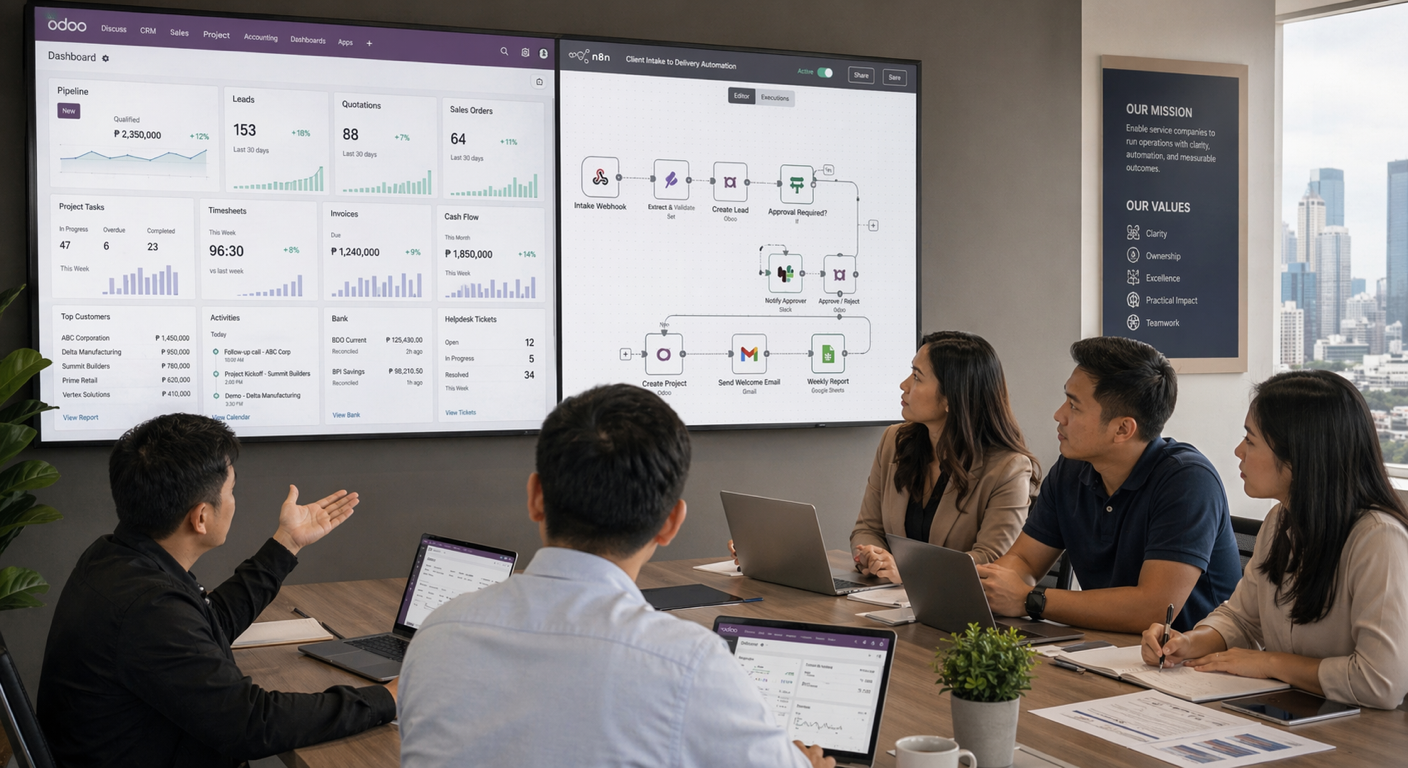
What you should notice
- Client names stay private by design.
- The outcomes are operational, not decorative.
- The examples come from real delivery work.
Delivery evidence
Real delivery patterns, with client names removed.
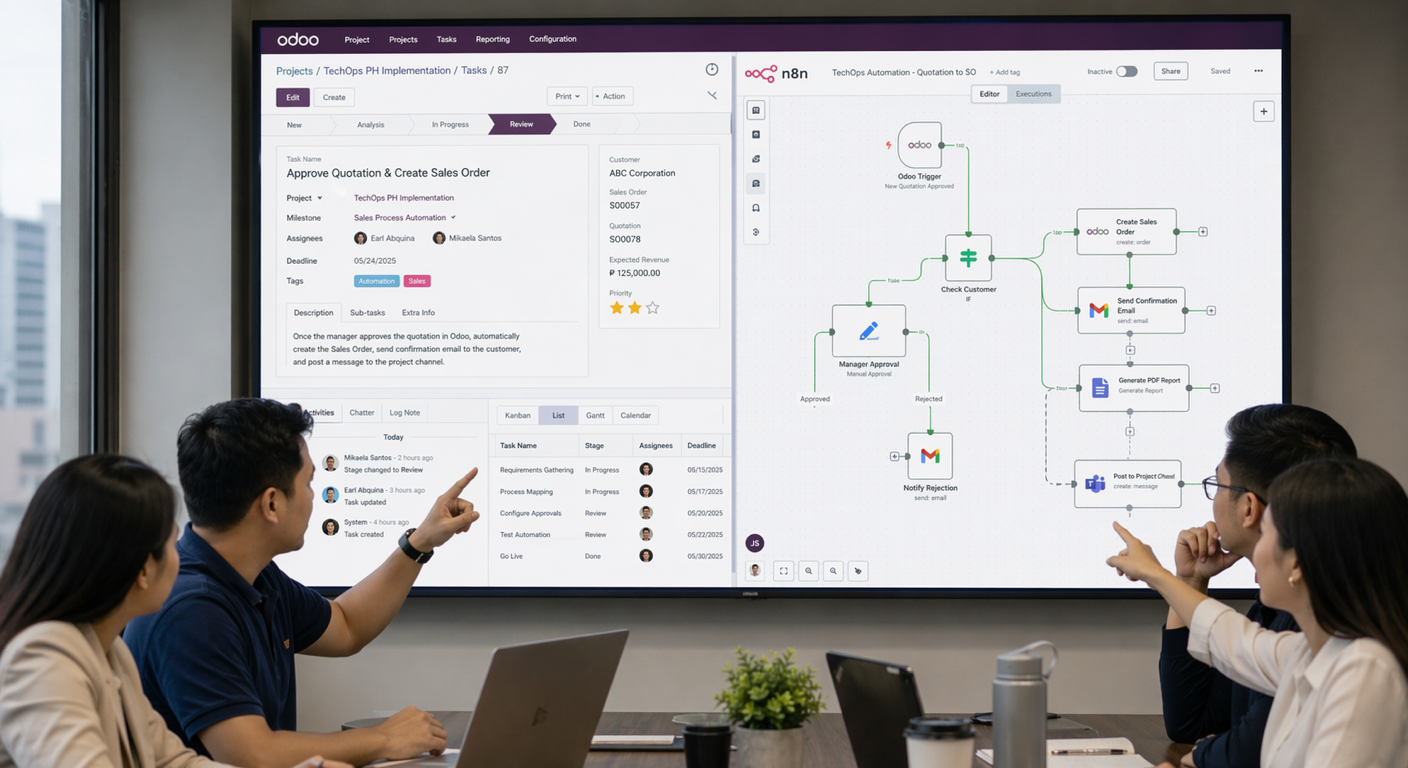
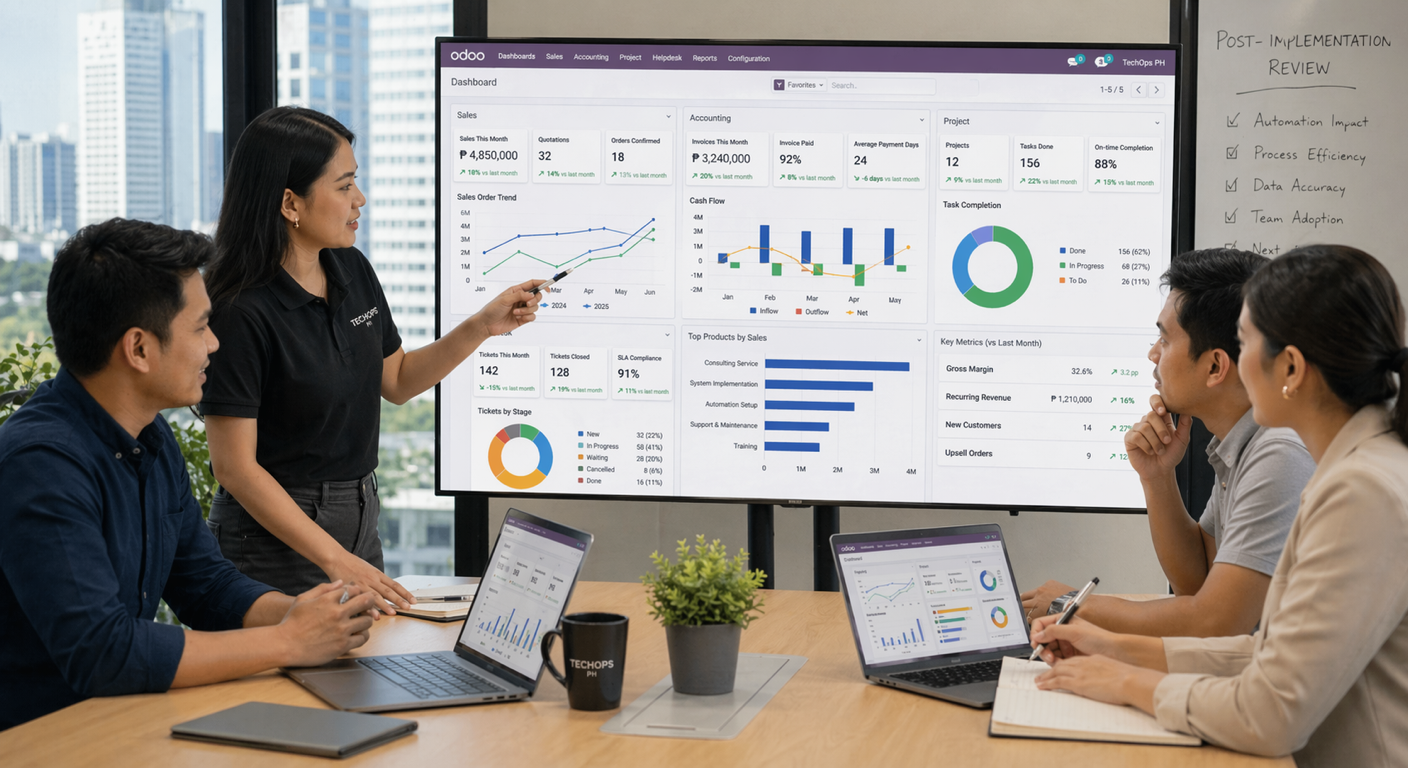
These cards are written from actual Tech Ops work found across our project repositories. They intentionally avoid customer names, URLs, private record names, and sensitive operating details.
- Problem: what made the work operationally important.
- Intervention: the system, data, or process change delivered.
- Result: what became more stable, visible, or repeatable.
Selected work
Case cards from real operating problems.
Each card is compressed for public reading. In a private discussion, we can walk through the deeper implementation shape, tradeoffs, and validation evidence without exposing another client's data.
Common pattern
The strongest projects were not just software installs. They were operating repairs made visible through records, controls, and repeatable workflows.
Education and learning operations
Clearer digital workflows for learning delivery.
How Tech Ops PH supported a learning-focused organization with digital touchpoints, clearer information flow, and a more reliable operating experience for users and stakeholders.
Theme: digital experience, workflow clarity, and operational structure.
Membership and organization platforms
Member-facing systems that are easier to sustain.
How Tech Ops PH helped an organization improve digital access, content structure, and the operational usefulness of its online platform.
Theme: portal experience, information architecture, and continuity.
Professional services and trust-led websites
Digital presence aligned to clearer business communication.
How Tech Ops PH supported professional service organizations with stronger web structure, positioning clarity, and user-focused information flow.
Theme: trust-building communication and clearer service journeys.
Operations, reporting, and process improvement
Internal visibility and process improvements behind the scenes.
How Tech Ops PH applies systems thinking, reporting structure, automation, and practical problem solving to improve the way teams execute work.
Theme: operational visibility, cleaner handoffs, and practical system change.
ERP migration
Legacy Odoo history moved into a usable Odoo 18 environment.
Problem: A legacy ERP server carried years of sales, CRM, invoice, refund, and payment history, but the environment itself was no longer a dependable operating base.
Intervention: We preserved the code, database, filestore, and configuration, archived the snapshot, then migrated the business history into Odoo 18 with model-by-model coverage reporting.
Result: The verified run reached 95.47% weighted coverage, 97.91% effective in-scope coverage, and 100% parity on contacts, CRM, sales orders, sales lines, and payments.
Accounting migration
Bank history reconstructed from operating spreadsheets.
Problem: Finance history lived outside Odoo across mixed bank sources, spreadsheet conventions, balance markers, and journal-specific naming patterns.
Intervention: We normalized the source data, mapped bank journals and clearing accounts, built a controlled importer, and kept the live import path explicitly committed after successful Odoo shell execution.
Result: 221 statements and 2,837 bank statement lines were imported, with direct bank-export and PDF importer paths prepared for future controlled runs.
Subscription continuity
Recurring billing moved forward without Enterprise lock-in.
Problem: Subscription billing needed to migrate without activating a proprietary subscription dependency in the new Odoo 18 target.
Intervention: We moved subscriptions into an OCA subscription track, linked sales order lines back to the destination records, and kept recurring automation disabled until cutover approval.
Result: 51 subscriptions and 62 subscription lines landed on the OCA track, with 44 bridge links and no duplicate recurring invoices before the approved cutover point.
Payment checkout
Local hosted checkout brought into the Odoo payment flow.
Problem: The business needed Philippine online payment acceptance without leaving payment configuration and transaction traceability outside the operating system.
Intervention: We built an Odoo payment provider around PayMongo Hosted Checkout, including provider setup, payment method data, checkout templates, and payment-provider views.
Result: Checkout, credentials, and transaction review moved into an Odoo-owned support path instead of becoming a disconnected website event.
Commission controls
Commission payouts made reviewable before approval.
Problem: Commission batches needed freight adjustments, tier-first splits, shared back-office pools, source-group rules, and exclusions that survived regeneration.
Intervention: We built batch preparation, invoice and payment traceability, snapshot payout lines, configurable exclusions, approval reporting, and payroll export support.
Result: Payout review became a repeatable control process, with exceptions preserved and employee payout rows grouped for operational approval.
Public campaign intake
A voucher campaign connected public signups to CRM and mailing operations.
Problem: Campaign registration needed to create qualified records, support one-time redemption, and keep follow-up channels organized after launch.
Intervention: We built a public digital-pass registration flow with mailing-list integration, back-office views, configuration controls, and a redemption wizard.
Result: The campaign intake became trackable, reusable, and easier for the team to operate beyond the initial promotion window.
Multi-instance sync
Customer Odoo instances connected to a support hub through a stable sync contract.
Problem: Support visibility depended on customer systems that could not be treated as one generic database or forced into one Odoo version.
Intervention: We designed client-side sync modules, a hub-side intake module, optional queue support, explicit import and export rules, and a stable public JSON contract across version branches.
Result: Customer-to-hub and approved hub-to-customer flows gained separated responsibilities, deterministic replay handling, and a documented integration boundary.
ERP cutover controls
A retail Odoo cutover moved from ad hoc repair to staged parity checks.
Problem: A high-risk Odoo 13-to-18 cutover had to protect accounting, stock history, reports, menus, and operational access while migration work was still being closed.
Intervention: We used a cutover checklist, SQL migration framework, stock-history dry-run procedure, view-type guard, legacy action cleanup, and menu smoke testing.
Result: The work became easier to sequence, verify, and close because each risk area had a named check instead of relying on informal inspection.
Manufacturing planning
Bulk-source production planning turned waste into a visible decision.
Problem: Production planners needed to cut lot-tracked bulk material into multiple finished goods while seeing source availability, planned width, leftover quantity, and waste before committing manufacturing orders.
Intervention: We added a first-party planning layer that reuses Odoo BoMs, lots, quants, manufacturing orders, and scrap records instead of modifying vendor or OCA source.
Result: Planners could choose a lower-waste mix, approve the plan, create linked manufacturing orders, and optionally record scrap from the remaining quantity.
Partner and invoice repair
Partner identity mismatches were corrected across sales and invoices.
Problem: Shared emails, company-person ambiguity, and migrated invoice records created mismatches that could distort customer history and receivable views.
Intervention: We rebuilt partner mapping with company-type awareness, recovered missing partner records, repaired parent-child links, and synchronized invoice partners with receivable and payable lines.
Result: Partner mapping reached complete source coverage, unresolved sales-order partner links dropped to zero, and a follow-up dry run found no remaining sales or invoice partner updates.
FAQ
How to read these examples.
These examples keep client names private because systems work often touches finance, operations, customers, and internal controls.
How do these case studies protect client privacy?
Yes. Client names, private URLs, record names, and sensitive operating details are removed. The business problem, intervention, and result are preserved so the work can still be evaluated.
What kinds of outcomes do these examples cover?
They cover Odoo migration, accounting reconstruction, subscription billing, hosted checkout, commission controls, public CRM intake, multi-instance sync, ERP cutover checks, manufacturing planning, and partner-data repair.
Can Tech Ops PH discuss the implementation details?
Yes. We can walk through the approach, tradeoffs, validation artifacts, rollout controls, and reusable patterns for a relevant scenario without exposing another client's confidential data.
Relevant walkthrough
Looking for a case closer to your operating problem?
Tell us what workflow is under pressure. We can point to a comparable pattern and help define what evidence, controls, and rollout path would matter for your situation.